Skip to content
Industry

Mobility and EV

BLDC propulsion, ESC design, battery management and CAN/LIN vehicle networks.

Scope

What we build in this sector

Product types we have designed, not a list of everything the sector contains.

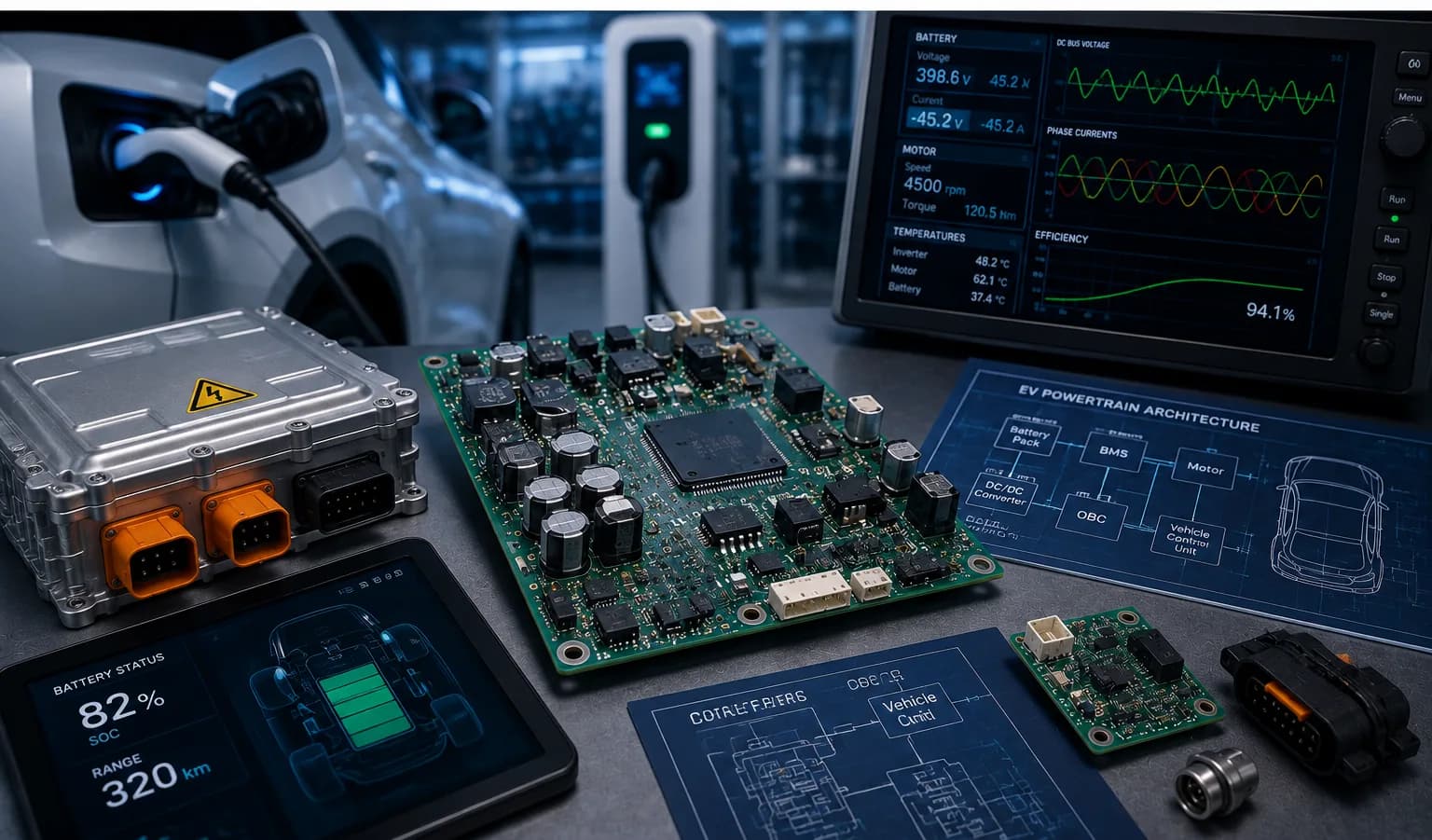
  • Traction and auxiliary motor drives
  • Battery management and monitoring
  • Charging and power-conversion controllers
  • Telematics and CAN gateway modules
Why it is hard

What separates this sector

The constraints that decide the design here, and that a general-purpose electronics supplier tends to meet for the first time on your project.

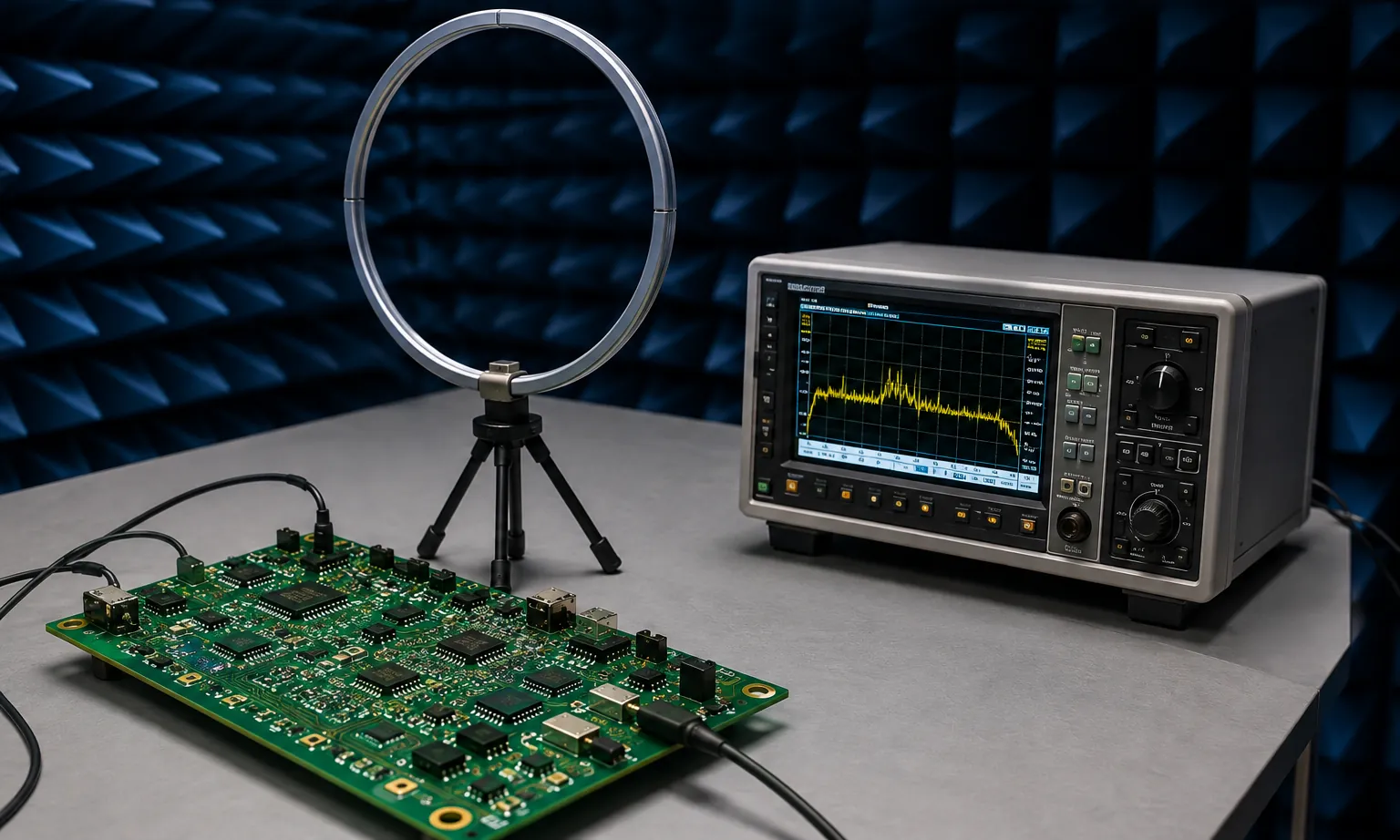
A board on a pedestal in an anechoic chamber facing a measurement antenna, emissions scan alongside
Emissions and immunity checked early, while a finding is still cheap.

Failure modes have to be analysed, not discovered

A drive fault in a passenger vehicle is a safety event. Which faults are credible, what each one degrades to, and how the system announces it are decided in design and evidenced afterwards.

Component qualification narrows the parts list

Automotive-qualified parts are a subset of what is available and a smaller subset of what is in stock. Designing without that constraint in view produces a BOM that cannot be built.

Torque quality is felt, not measured

Ripple that is invisible in a pump is felt directly by a passenger. The acceptance criterion is subjective and the engineering to meet it is not.

Detail

How we approach it

Propulsion and battery electronics carry a safety argument as well as a performance one. The interesting work is usually in the fault paths rather than the nominal case.

What this usually involves

  • Sensorless BLDC and field-oriented control for propulsion
  • ESC design, including the protection that decides what happens when a phase shorts
  • Battery management, cell balancing and the thermal behaviour that governs both
  • CAN and LIN integration into a vehicle network you do not control
Compliance context

What the product is judged against

We design against these and produce the evidence a submission needs. Certification is held by whoever owns the product, not by us — any supplier who tells you otherwise is describing a different arrangement than the one you are buying.

  • ISO 26262 (functional safety)
  • IATF 16949 (quality management)
  • AEC-Q100 / Q200 (component qualification)
  • ISO 11898 (CAN)
  • UN ECE R100 (electric powertrain safety)

Published work

No case study is published in this sector yet. We have delivered work here — ask us and we will talk you through it directly.

Building something in this space?

Tell us what the product has to do and where it has to survive. We will come back within one business day with an honest read on feasibility, risk and timeline.