Skip to content
Industry

Medical and wearables

BLE sensor nodes, sub-5 µA power budgets, and the companion applications that make the data useful.

Scope

What we build in this sector

Product types we have designed, not a list of everything the sector contains.

  • BLE sensor nodes and wearable monitors
  • Connected dosing and delivery devices
  • Companion iOS and Android applications
  • Charging and power-management subsystems
Why it is hard

What separates this sector

The constraints that decide the design here, and that a general-purpose electronics supplier tends to meet for the first time on your project.

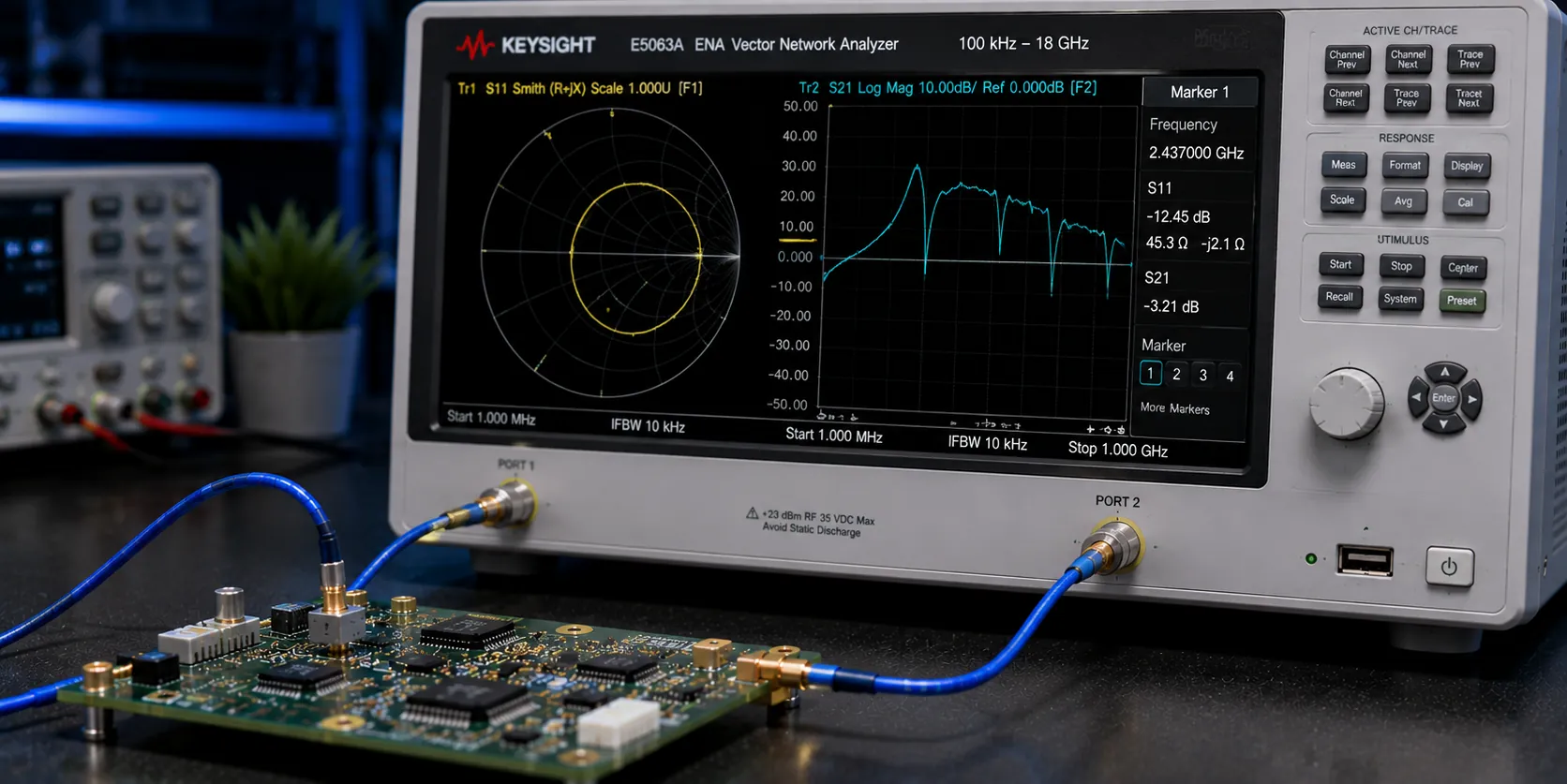
A small board connected to a vector network analyser showing a Smith chart and a return-loss trace
A wearable antenna is detuned by the body it sits against. The match is measured on the product, not on a reference board.

Runtime and reliability pull against each other

Every microamp saved by sleeping is a moment the device is not recording. Optimising either alone is straightforward; holding both is the actual engineering.

A missing record is worse than a late one

Event logging has to survive power loss and out-of-range periods, then reconcile without duplicates. A gap in a clinical record is not a synchronisation bug, it is missing evidence.

The software lifecycle is auditable

Requirements, risk analysis and traceability are part of the deliverable in this sector, not paperwork added afterwards. Work that cannot be traced back to a requirement cannot be submitted.

Detail

How we approach it

A wearable or a connected medical device is judged on two things that pull against each other: how long it runs, and how reliably it records. Optimising either one alone is straightforward; holding both is the work.

What this usually involves

  • Power budgets audited to the microamp across every device state, measured rather than estimated
  • Local event logging that survives power loss and reconciles without duplicates
  • Custom BLE profiles for scheduling, identification and safety-lock state
  • Native iOS and Android applications built against one shared protocol specification
Compliance context

What the product is judged against

We design against these and produce the evidence a submission needs. Certification is held by whoever owns the product, not by us — any supplier who tells you otherwise is describing a different arrangement than the one you are buying.

  • IEC 60601-1 / -1-2 (safety and EMC)
  • IEC 62304 (medical device software lifecycle)
  • ISO 13485 (quality management)
  • ISO 10993 (biocompatibility, for skin-contact parts)
  • Bluetooth SIG qualification

Published work

1 published
BLEsub-5 µAiOS + Android

Sub-5 µA BLE sensor node with companion app

A connected dosing device with flash-backed event logging, native iOS and Android apps, and idle current held below 5 µA.

Read the case study →

Building something in this space?

Tell us what the product has to do and where it has to survive. We will come back within one business day with an honest read on feasibility, risk and timeline.